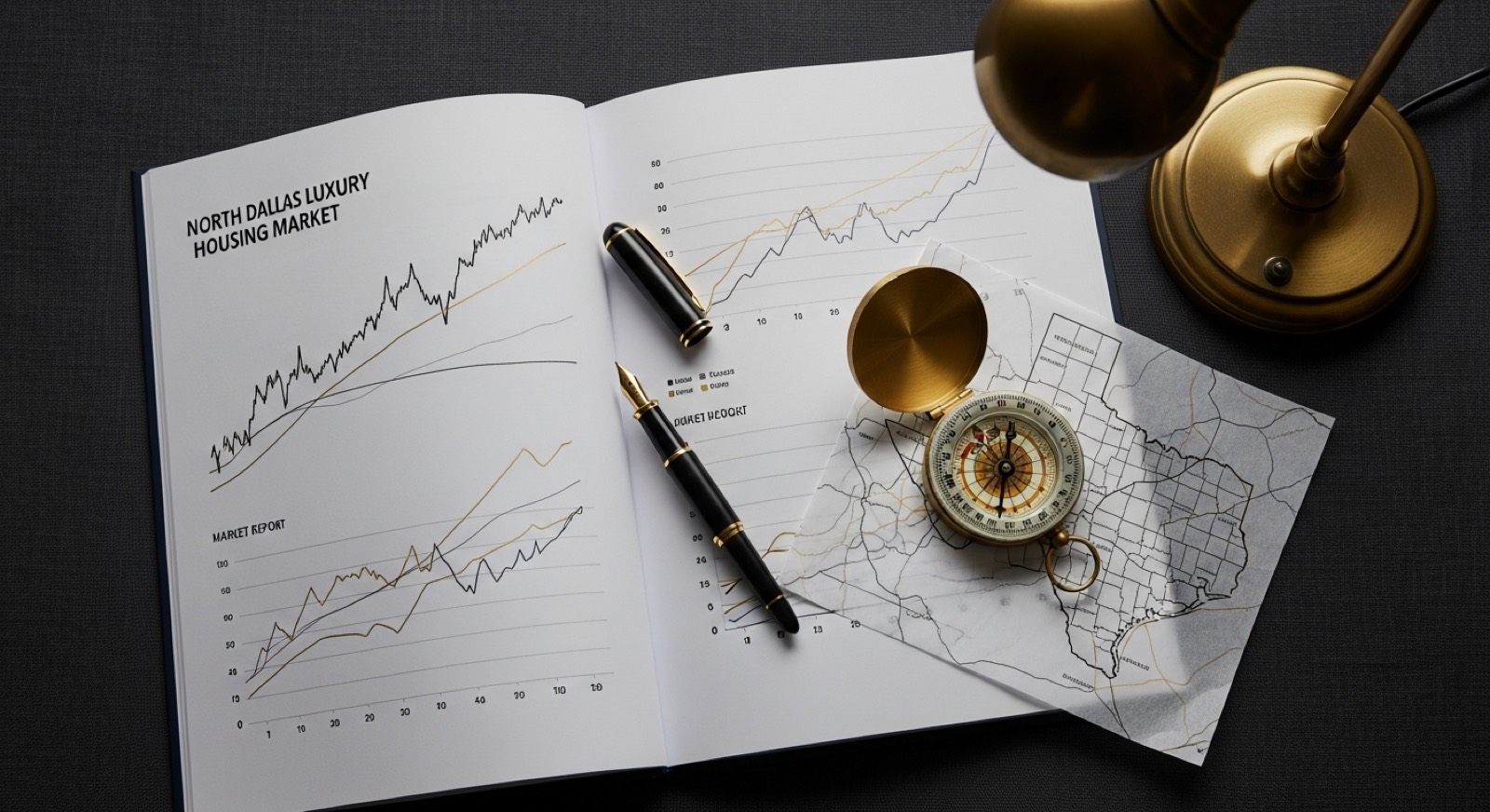
Media coverage of the housing market tends to treat rate sensitivity as uniform. A 50-basis-point move in the 30-year fixed, the reporting implies, should chill every buyer the same way. That is accurate for the median U.S. buyer and meaningfully wrong for the luxury tier.
Three dynamics separate luxury buyer behavior from the broader market. First, down-payment percentages are structurally higher. In the $1.5M+ segment across DFW, it is common to see 30% to 40% down on financed purchases, with a significant minority of transactions closing in cash. The monthly-payment arithmetic that drives the move-up-buyer market simply matters less when the financed portion is half the headline price.
Second, the timing of the purchase decision is usually tied to life events, not rate windows. A corporate relocation, an executive liquidity event, a growing family, a downsizing empty-nester. These drivers are on their own clocks. Luxury buyers are more willing to pay today's rate and refinance if and when the rate environment improves, because the cost of mistiming a family decision usually exceeds the cost of mistiming an interest rate.
Third, the opportunity cost of cash is more complex at higher asset levels. A buyer who could pay cash but is earning a solid yield on a treasury ladder and could finance at current jumbo rates is making a spread decision. Non-trivial, but very different from a first-time buyer for whom the mortgage is simply 'what their payment will be.'
The practical takeaway for sellers in this tier: rate-cycle narratives in the national press are a weaker predictor of your buyer's behavior than they are for the broader market. The right pricing discipline matters far more than timing the rate market.